
Bicentennial quarters look special. Dual dates. A drummer on the reverse. A national celebration stamped into metal. That visual difference fuels the idea that these coins must be rare or valuable. They are not—at least not in the way online listings suggest.
The 1776–1976 quarter was produced in extraordinary numbers to mark America’s 200th birthday. Instead of creating scarcity, the U.S. Mint flooded circulation. Today, that decision defines the market reality and explains why most Bicentennial quarters trade at face value or just above it.
The Numbers That Matter More Than the Design
Value starts with supply. Bicentennial quarters fail the scarcity test immediately.
- Philadelphia: ~988 million clad coins
- Denver: ~859 million clad coins
- Total clad mintage: over 1.6 billion
These figures exclude proofs and special finishes. The sheer volume guarantees availability in every grade up through Mint State. No amount of patriotic appeal can offset that.
Even clean, uncirculated examples remain common. Certified MS-65 clad quarters typically sell between $20 and $50. That price reflects condition, not rarity.
Why Online Prices Drift into Fantasy
Search results in a coin identifier app and marketplaces often show Bicentennial quarters priced at $500, $1,000, or more. These listings rely on confusion, not evidence.
Common tactics include:
- Labeling wear as a “filled mint mark”
- Calling flattened letters a “missing mint mark error”
- Using stock photos of high-grade coins to sell worn examples
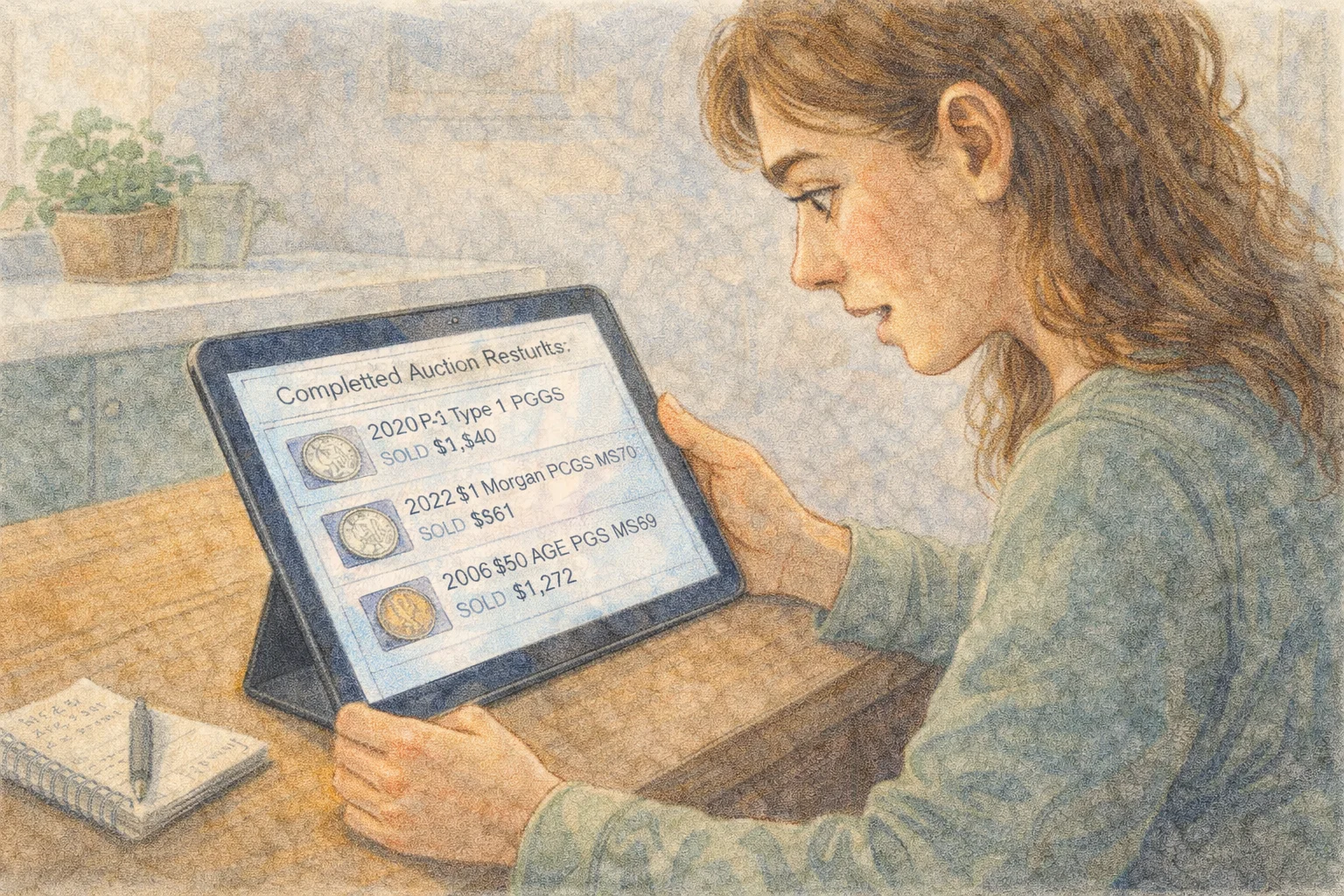
- Avoiding sold-price comparisons
The goal is not accuracy. It is visibility. Algorithms reward dramatic claims, not correct ones.
Clad vs. Silver: A Critical Distinction
Not all Bicentennial quarters are the same, and this difference gets blurred intentionally.
There are two main categories:
- Clad circulation strikes (P/D): copper-nickel, overwhelmingly common
- 40% silver proofs (S): struck for collectors
Silver proofs had a mintage of about 11 million. They carry a modest premium tied to silver content and condition. Typical prices range from $10 to $50, depending on grade. They are collectible. They are not rare.
What Condition Actually Buys You
Condition matters, but only within limits set by supply.
| Condition | Typical Market Range |
| Circulated (VF–XF) | $0.25–$2 |
| Uncirculated raw | $5–$15 |
| MS-65 slabbed | $20–$50 |
| Silver proof S | $10–$50 |
These numbers come from completed sales, not asking prices. Anything far above them needs a documented error or certification that confirms something exceptional.
The Emotional Hook That Costs Money
Bicentennial quarters sit at the intersection of nostalgia and misinformation. Many buyers remember them from childhood and never tend to check the current situation via the coin identification app. Sellers exploit that familiarity by implying hidden value.
The reality is simpler. Most Bicentennial quarters are souvenirs, not investments. Treating them as rare collectibles leads to overpaying almost every time.
The “Filled Mint Mark” Myth and Other Costly Mislabels
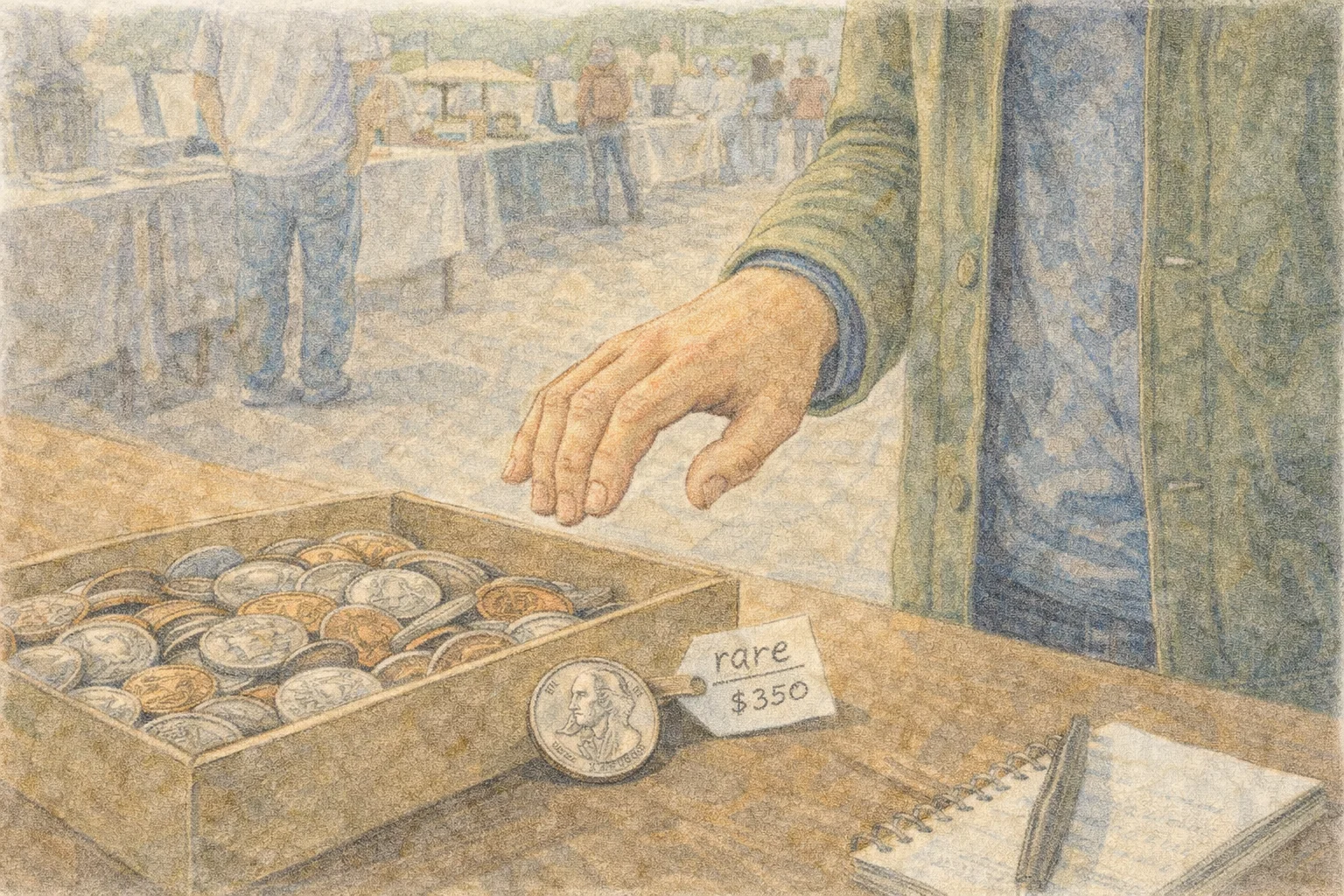
The most persistent Bicentennial quarter scam uses one phrase: “rare filled mint mark.” It appears everywhere, usually paired with four-digit prices and dramatic descriptions. The problem is simple. In almost every case, the coin shows normal circulation wear, not a mint error.
Why “Filled D” Claims Fall Apart
A genuine filled mint mark happens when grease or debris blocks part of a punch or die, creating a repeatable, raised effect across multiple coins. That is not what most sellers show.
What you actually see on hyped listings:
- Flattened or smeared mint marks
- Loss of detail from abrasion
- Rounded edges caused by circulation
These are post-mint effects. They do not qualify as errors. They are not attributed by major grading services.
Neither PCGS nor NGC recognizes a “filled D” Bicentennial quarter as a collectible variety. The Cherrypickers’ Guide lists no such RPM or filled-mint attribution for this issue. That ends the discussion.
Machine Doubling vs. Real Doubled Dies
Another common tactic involves calling shelf-like doubling a “rare DDO.”
Here is the distinction:
- True doubled die: raised, rounded secondary images from hubbing
- Machine doubling: flat, shelf-like edges from die bounce
Bicentennial quarters do have real doubled die obverses, notably FS-101 and FS-102. These show clear, raised doubling and are scarce. Certified examples sell between $500 and $8,000, depending on grade and clarity.
Everything else labeled “DDO” without certification is almost always machine doubling.
Real Errors Do Exist — But They Look Obvious
This does not mean all Bicentennial errors are worthless. A small number are legitimate and valuable.
Examples that pass scrutiny:
- Off-center strikes missing 50% or more, with date visible
- Wrong planchet errors, including nickel planchet strikes
- Die caps and major cuds that disrupt design
These errors are visually dramatic and mechanically explainable. They also get certified.
Typical value ranges:
- Off-center strikes: $300–$1,000
- Nickel planchet errors: up to $1,900 in Mint State
- Major die caps: $2,000+ in auction settings
If an “error” requires a paragraph of explanation to understand, it is probably not worth money.
Hype vs. Reality — Side by Side
| Claim | Typical Asking Price | Market Reality |
| Worn “Filled D” | $1,000+ | $0.25–$2 |
| Raw “Rare DDO” | $500+ | Machine doubling |
| Clad MS-65 raw | $100+ | $20–$50 slabbed |
| Silver proof “investment” | $9,000 | $10–$50 typical |
| Certified FS-101 DDO | $500–$8,000 | Legitimate |
Why These Listings Keep Selling
The answer is not ignorance alone. It is a presentation.
- Search algorithms reward keywords like rare and error
- Buyers rarely check sold listings
- Certification costs deter sellers from proving claims
Once a buyer pays, the damage is done.
How to Avoid Overpaying and When Bicentennials Actually Make Sense
By now, the pattern is clear. Most Bicentennial quarters are common. Most viral claims collapse under basic checks. The remaining question is practical: how do buyers protect themselves, and is there any reason to own these coins at all?
Simple Rules That Prevent Expensive Mistakes
Avoiding losses does not require expert tools. It requires discipline.
Follow these rules:
- Ignore asking prices. Always check sold listings.
- Demand certification for any claim above $100.
- Treat wear as damage, not as an error.
- Skip emotional language in listings. Data matters.
If a seller cannot show certification or documented diagnostics, price the coin as common—or walk away.
Where Bicentennial Quarters Still Belong
Bicentennial quarters are not useless. They are simply mispositioned.
They make sense as:
- Type set pieces, representing the 1970s
- Complete mint sets, still affordable at $50–$100
- Silver proof examples, tied to bullion value
- Verified error coins, certified and dramatic
They do not make sense as speculative investments or retirement plays.
Why Complete Sets Beat Single Coins
One overlooked truth: sets outperform singles for Bicentennials.
A full 1976 mint set provides:
- Historical context
- Multiple coins for the same money
- Stable resale demand
That is why complete sets sell consistently while single clad quarters stagnate.
Tools That Help Cut Through Noise
Many collectors photograph suspected finds and check specifications—year, mint, composition, diameter, and weight—using tools like the Coin ID Scanner app. Quick checks expose obvious mislabels before time or money is wasted. Collection tracking also helps separate verified errors from impulse buys.
Technology does not create value. It prevents mistakes.
Bicentennial quarters are one of the most overhyped modern U.S. coins online. Massive mintages ensure availability. Most error claims are misinterpretations of wear or machine doubling. Four-figure prices on worn examples have no factual support.
Spend money only where evidence exists:
- Certification
- Clear diagnostics
- Verified auction results
Everything else is nostalgia packaged as rarity.
Avoid the trap, and Bicentennials become what they should be: a modest historical footnote, not a financial gamble.